
Duke Today recently featured Kate Bowler reflecting on joy, faith and miracles. Bowler is a Duke scholar known as a public voice on illness, hope and spirituality. The details of her remarks are beyond what I can quote here, so I won't put words in her mouth. But the themes she is known for are worth sitting with, especially if you are tired, grieving or just worn thin. By the end, you'll have a few quiet ways to practice a joy that doesn't wait for everything to be okay.
The Kind of Hope That Doesn't Look Away
Most of us have been handed the cheerful version of faith at some point. Keep smiling. Everything happens for a reason. Just trust, and it will all turn out fine.
If you have ever sat in a hospital waiting room, or beside an empty chair at the dinner table, you know how thin that can feel. Per Duke Today's coverage, Bowler's perspective resonates because it offers a grounded alternative to simplistic positivity.
That is the heart of this story. Honest hope does not ask you to pretend. It lets you say, "This hurts," and "God is still here," in the same breath.
Joy Is Not the Same as Everything Being Fine
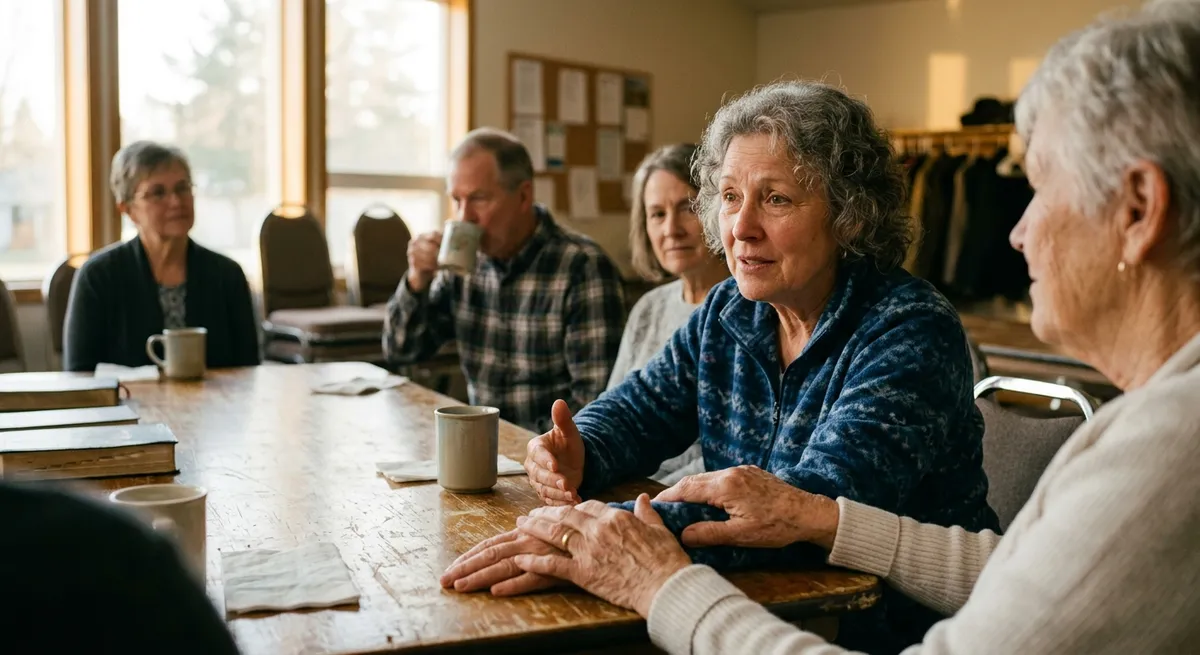
Think of a woman at a bedside, holding the hand of someone she loves. Nothing about the moment is easy. Yet someone tells a old family story, and for ten seconds the whole room laughs. That laugh is not denial. It is joy breaking in through a crack.
This is the kind of joy worth looking for. You can practice it in small, doable ways:
- Name one good thing each evening. Not to cancel out the hard things, only to sit beside them.
- Say yes to small gladness. A warm meal, a phone call, a sunrise. Let it be enough for the moment.
- Let others bring joy to you. When you cannot muster it yourself, borrow some from people who love you.
Faith has long held that joy and sorrow can share a room. Scripture itself is full of people who wept and worshiped in the same chapter.
Rethinking What a Miracle Looks Like
We tend to picture miracles as sudden reversals: the diagnosis that vanishes, the door that swings open. Those stories are real and precious to the people who live them.
But one angle in the conversation around Bowler's work invites us to look beyond instant healing. What if miracles also show up as the casserole on the porch, the friend who stays past midnight, the peace that arrives when nothing has changed?
If you believe, as many readers of this site do, that miracles are everywhere, then this is not a lowering of the bar. It is an opening of the eyes. A steady presence in the dark is no small wonder.
Faith Language for Grief and Uncertainty
Sometimes the hardest part of a hard season is not knowing what to say. Faith communities can struggle here. We reach for tidy phrases because silence feels uncomfortable.
A few gentler options:
- "I'm so sorry. I'm here." It needs no explanation.
- "I'm praying for you, and I'll bring dinner Thursday." Pair the prayer with something you can actually do.
- "I don't understand this, but I trust you're not alone." Honest, and still rooted in belief.
Notice what these leave out: any promise about how the story ends. Trust does not require us to know the ending. It asks us to keep walking with each other until we get there.
Why This Matters in a Weary Season
Per the coverage, conversations about meaning, resilience and belief feel especially relevant as people face uncertainty, grief and burnout. That fits what many of us feel. We are tired, and we want a faith that can carry weight rather than one that only works on good days.
It is hard not to think of the quiet people in every congregation who have lived this. The man who keeps showing up to church after losing his wife. The mother who still sings in the car on the way to treatment. They are not denying pain. They are trusting something larger than it.
A Simple Practice for This Week
Try this once, tonight or tomorrow morning. Sit for three minutes. Tell God plainly what is hard. Then tell God one thing you are grateful for, however small. Do not try to make the two match. Let them both be true.
Then look around over the next few days for a small miracle you might have missed: a kindness, a laugh, a stretch of calm. Write it down.
What We Carry Out of the Dark
The deepest truth in all of this may be the simplest one. You do not have to be okay to be held. Joy does not wait for the storm to end; sometimes it sits down beside you in the middle of it, and that is when you recognize it as grace.